DAWNSTAR I
Overview
ME 370, Team 33 · UIUC
Skills used: CAD, 4-bar linkage design, Geneva mechanism, Scotch-yoke, bevel gears, curve synthesis, laser cutting, 3D printing, tolerance analysis, mechanical assembly.
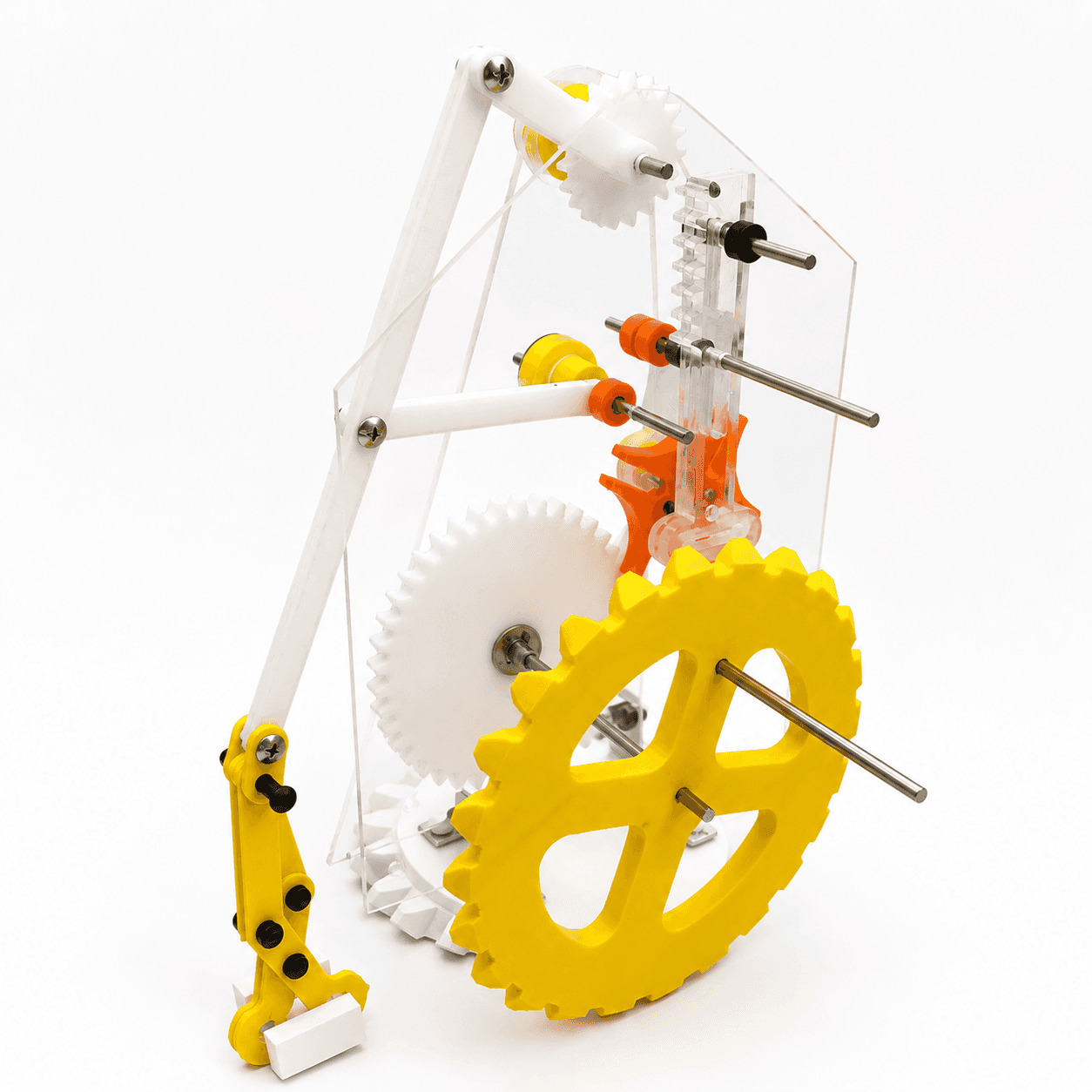
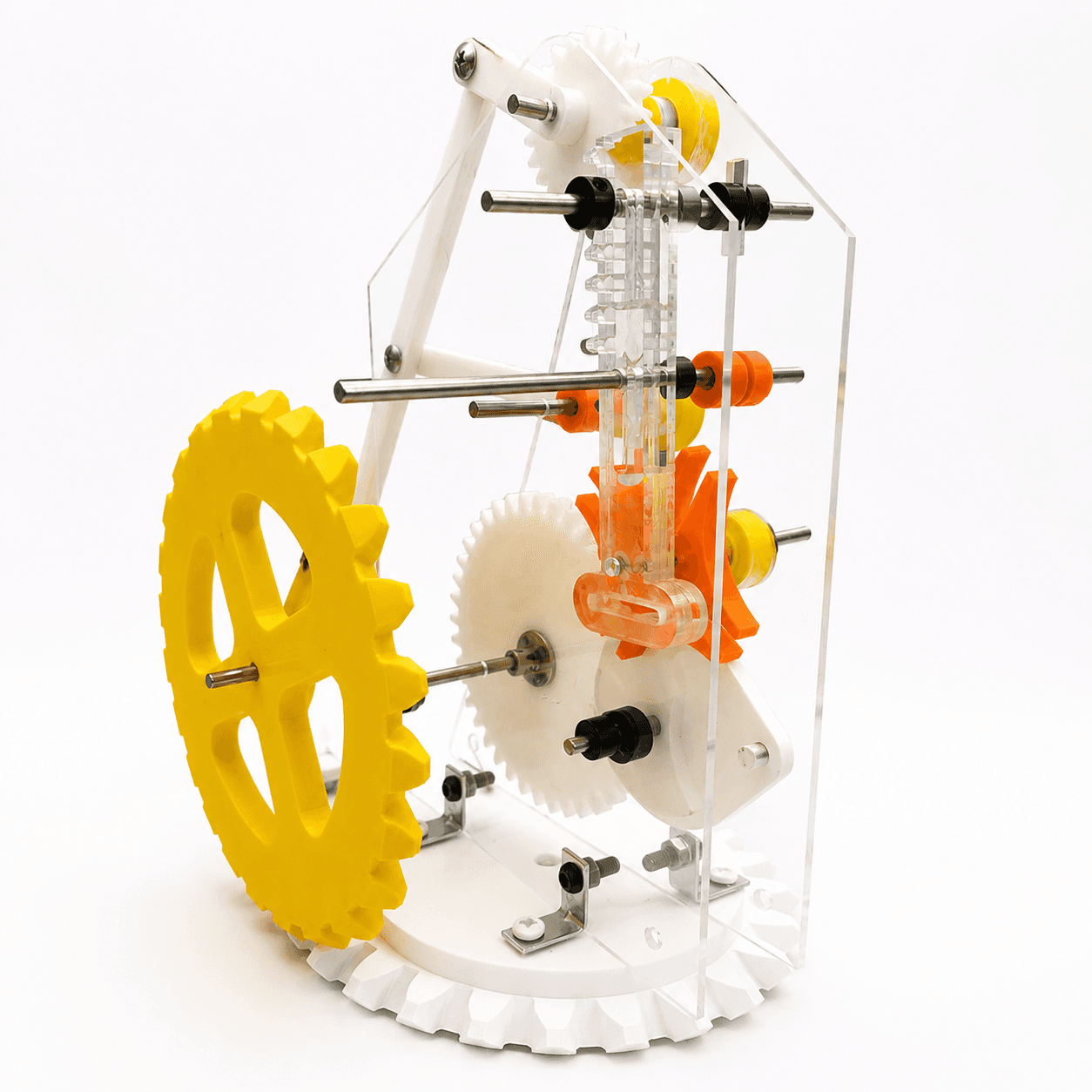
A hand-cranked machine that picks up a payload, rotates 180°, and sets it down on a single degree of freedom.
Phase 1: Ideation & Research. Started with a Sarrus linkage paired with a helical base and a gravity-assisted claw. Built a moderate-fidelity prototype for the first design review.
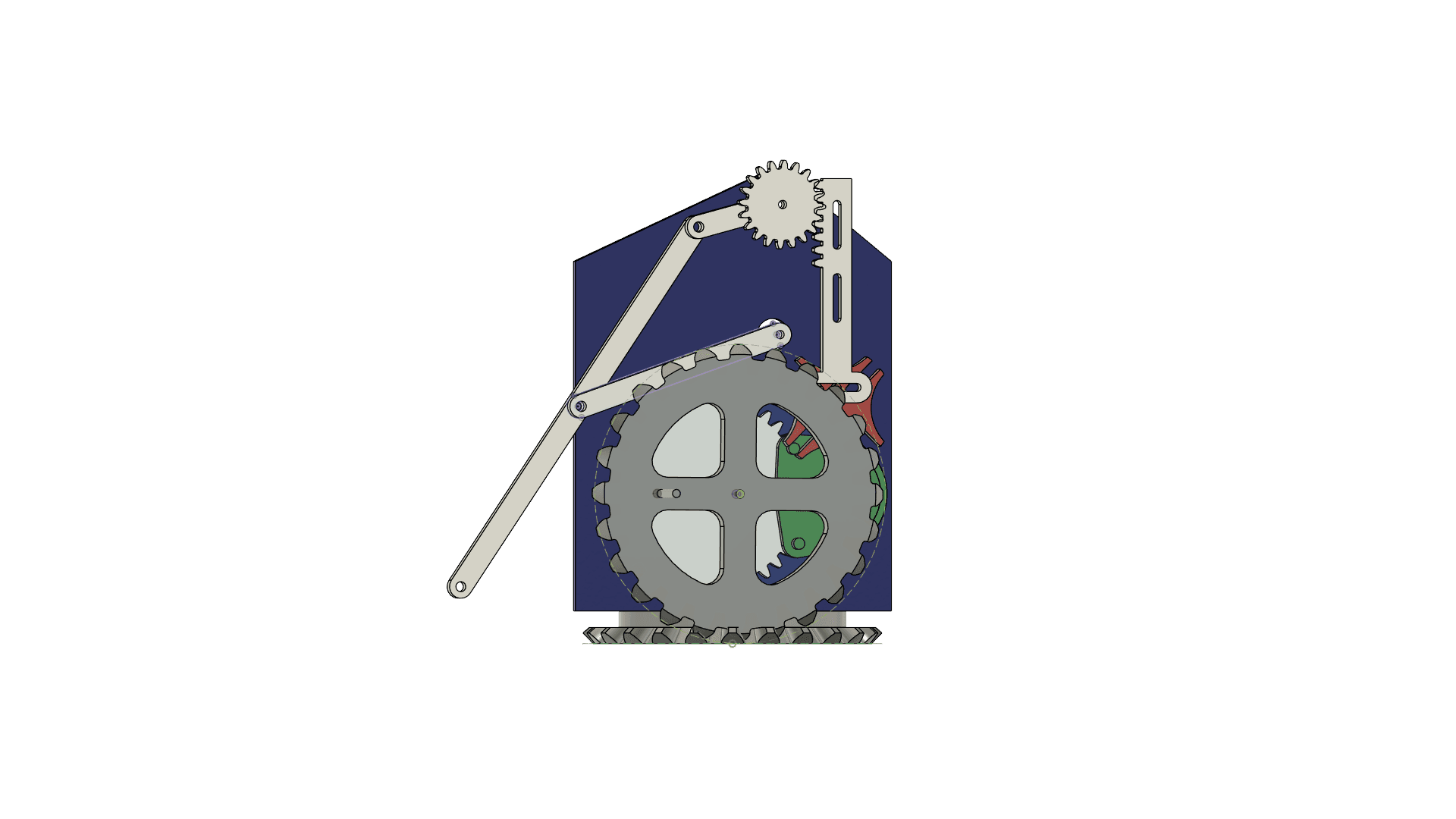
Phase 2: Pivot After Review. Feedback flagged the Sarrus approach as too complex to manufacture reliably. Pivoted to a hand crank driving a gearbox that fed two subsystems: bevel gears for rotation and a four-bar linkage actuating a passive gravity hook.
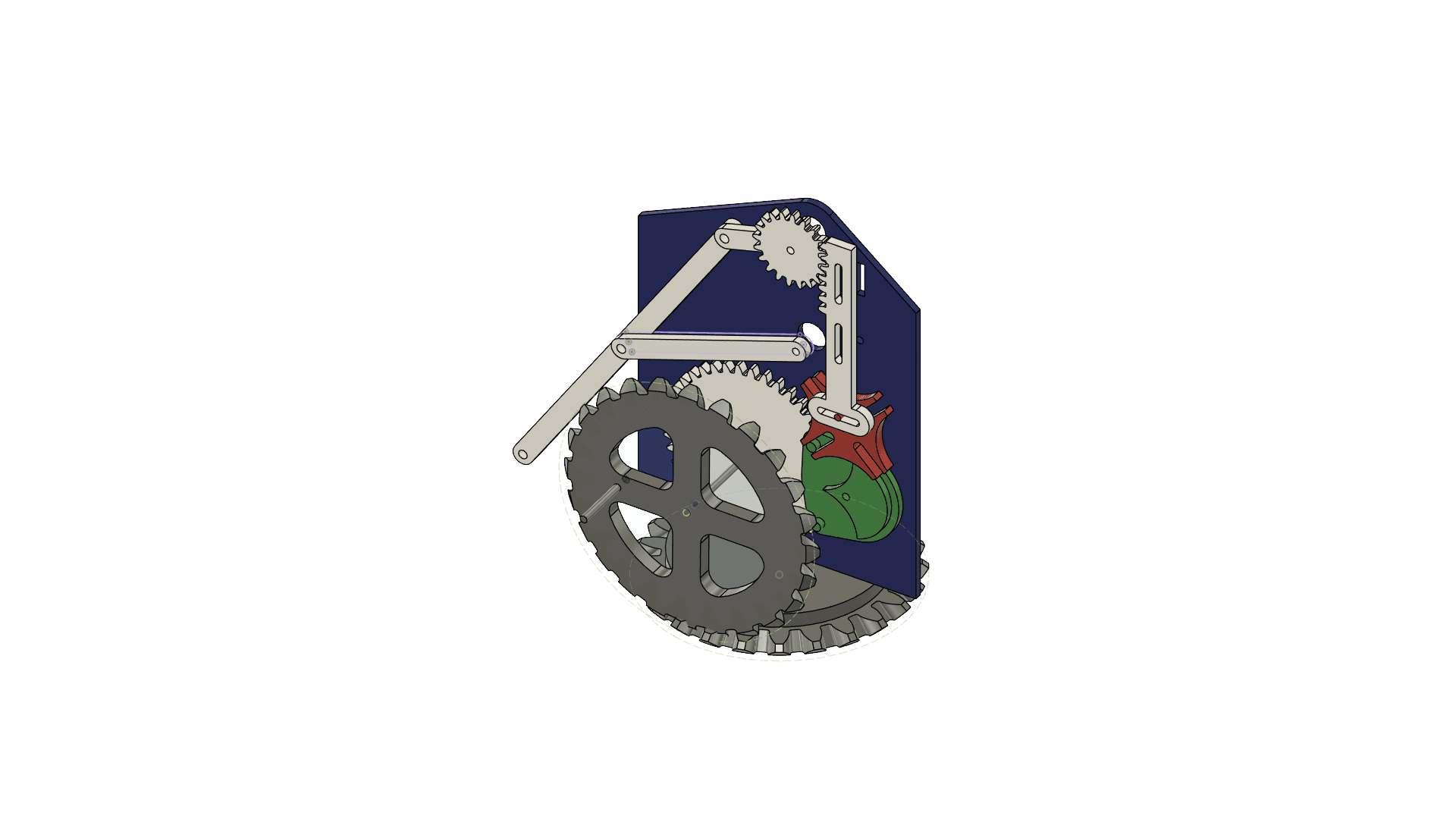
Phase 3: Design Synthesis. Selected a four-bar coupler curve (1.5 link ratio, 180° coupler angle) for the lifting motion. Added a Scotch-yoke to convert rotation into linear lift and a Geneva mechanism with a 4:1 gear ratio to time the pickup, hold, and release.
Phase 4: CAD & Fabrication. Laser-cut acrylic and Delrin for the frame, gears, and linkages. 3D-printed PLA for the Geneva mechanism and carriage. Tolerances set at ±0.2 mm for printed parts, ±0.1 mm for laser-cut.
Phase 5: Assembly & Lessons. Hand-fit parts, adjusted press fits, and tuned the Geneva indexing. Each subsystem worked in isolation, but stacked tolerances created friction across the assembly, with gearbox alignment as the main culprit.
Outcome. A working single-DOF mechanism and a clear lesson on managing tolerance stack-up that directly shaped Dawnstar II.
Category
Robot
Client
Year
Spring 2026